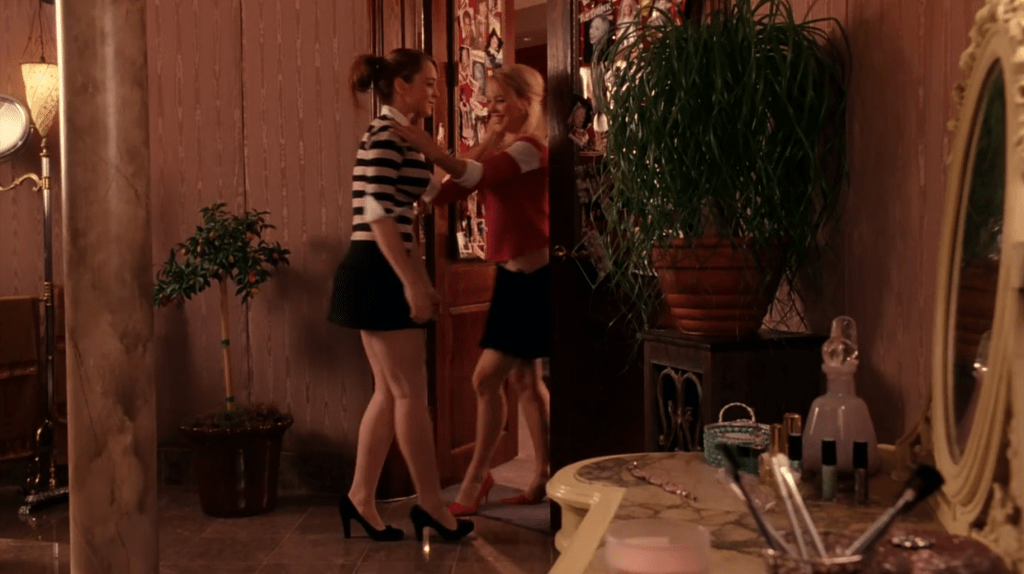
Hamilton, Guy, dir. “Diamonds Are Forever.” 1971.
FILM SUMMARY
James Bond infiltrates a diamond-smuggling ring in Guy Hamilton’s 1971 Diamonds are Forever. Bond’s primary antagonist throughout the series, Ernst Blofeld, devises a plot to decimate Washington D.C. with a diamond-powered laser; Bond’s mission—to conspire with American intelligence agents and diamond broker Tiffany Chase to foil Blofeld’s terrorist plot—takes him to Amsterdam and Las Vegas, Nevada.
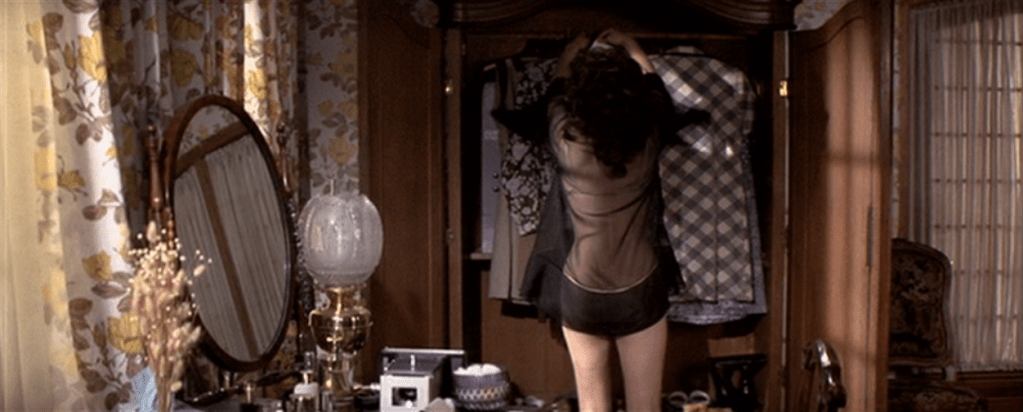
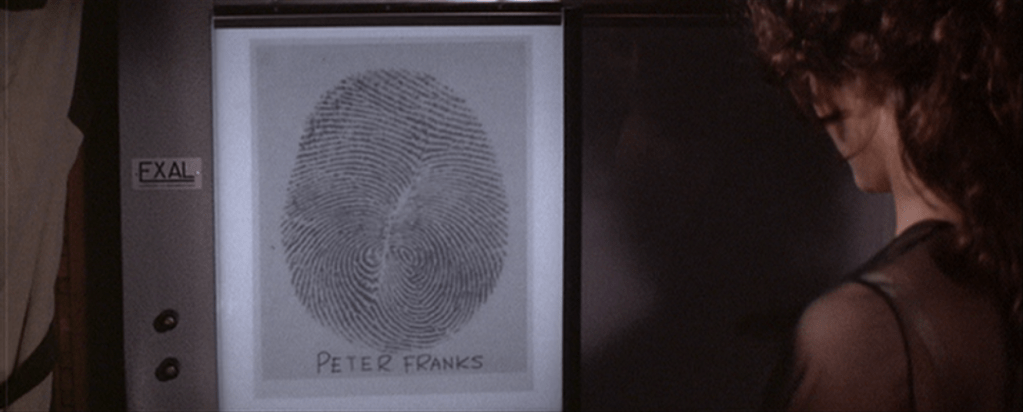
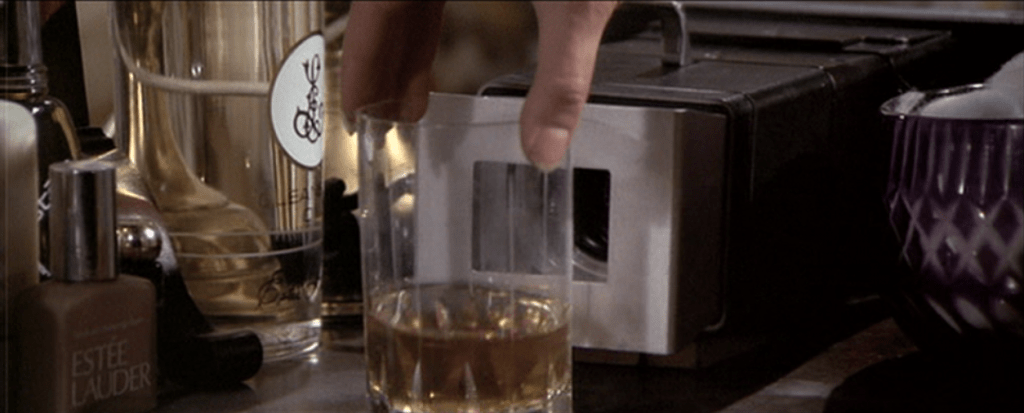
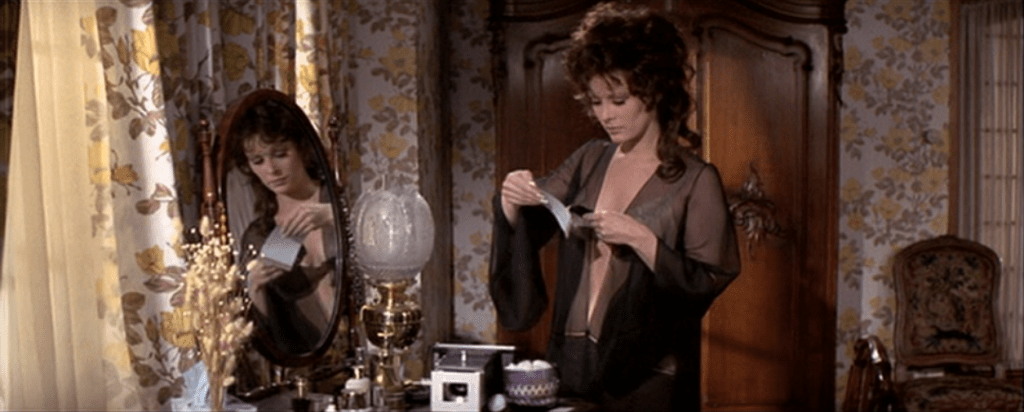
Bond first meets Tiffany, his love interest in the film, in her Amsterdam apartment. Impersonating Peter Franks, another member of the smuggling ring, Bond intercepts the diamonds before they can reach Blofeld. While securing the diamonds, he kills the real Peter Franks and fakes his own death by planting his ID on the corpse; Tiffany and Bond escape to Los Angeles, storing the diamonds discreetly in Franks’ dead body. The couple is separated upon their arrival to the United States. Bond is instructed by his contact in the CIA to bring Franks’ corpse to Las Vegas where it will be cremated to retrieve the diamonds. Bond is double-crossed at the funeral home and successfully avoids being cremated by Mr. Wint and Mr. Kidd, two other members of the diamond smuggling ring. Unbeknownst to Wint and Kidd, the diamonds in Franks’ body were fake per Bond’s instructions to his American allies to ship the real diamonds away themselves.
Bond stays in Vegas after his near-death experience, visiting The Whyte House Hotel and Casino for a night of gambling. He meets another woman, Plenty O’Toole, while playing craps and brings her to his room. Plenty and James are bombarded by henchmen from the funeral home, upset that the diamonds they expected to intercept via cremation were not real. Plenty is thrown out of the hotel room window into the pool below during Bond’s scuffle with the henchmen.
Bond reunites with Tiffany and convinces her to help in ensuring the safety of the real diamonds; he tells Tiffany to seize the real diamonds at the Circus Circus Casino. Tiffany tries to flee with the diamonds but decides to stay and help Bond after realizing that her life is in danger as more members of the smuggling ring turn up dead. The pair oversee the real diamonds being passed off to the casino manager of The Whyte House; Bond follows the diamonds and Tiffany stays back. In his pursuit of the diamonds, James discovers that they have been given to a scientist and infiltrates a remote laboratory owned by Willard Whyte, namesake and billionaire owner of The Whyte House, in the Nevada desert. Here, a group of scientists are developing a satellite laser whose beam is concentrated and strengthened by diamonds. Bond is caught in the laboratory before he can intercept the diamonds, escapes unscathed, and is able to reunite with Tiffany in Vegas.
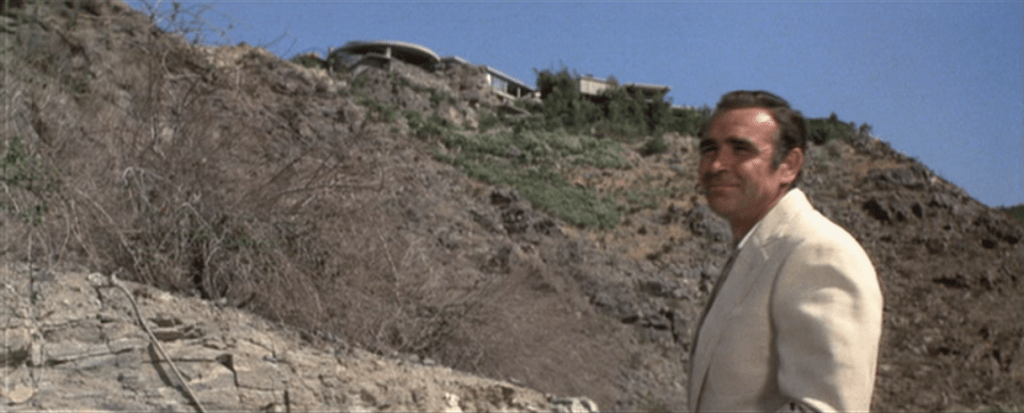
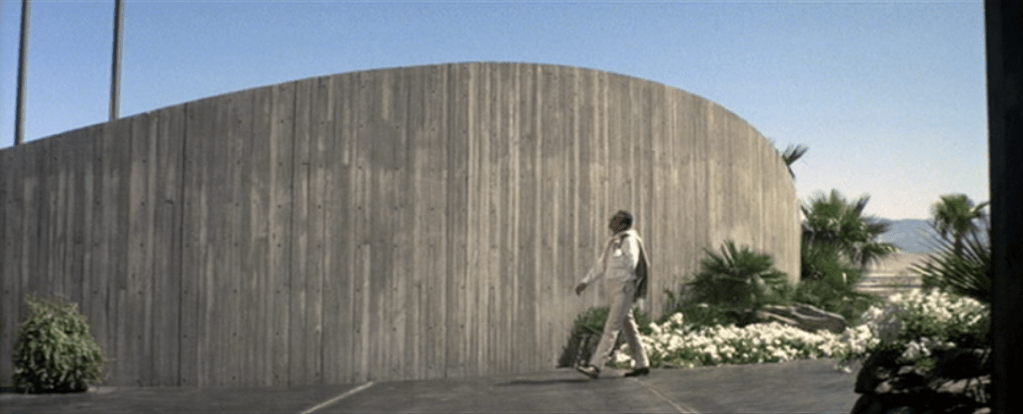
Bond goes to confront Whyte about his involvement with the laboratory and is instead met by two Blofelds, one a clone and one the real man. Bond manages to kill the clone but is incapacitated by gas before he can reach the real Blofeld. Mr. Wint and Mr. Kidd bring Bond to the desert to die, but he escapes and tracks down Willard Whyte’s home, also in the desert. At Whyte’s bachelor pad, he encounters and subdues female bodyguards Bambi and Thumper and frees Whyte from his house arrest and ties to Blofeld.
Whyte cooperates with Bond and helps him discover Blofeld’s plan to destroy nuclear weapons across the globe with the diamond-powered laser. Bond and the CIA track Blofeld down to an oil rig off the coast of California and Bond attempts to deactivate the laser. Bond is unable to destroy the laser but is successful in wrecking the satellite’s control center on the rig; Blofeld escapes the chaos on a submarine. Bond reunites with Tiffany on a romantic cruise back to England and the film concludes with Tiffany jokingly asking Bond if they will ever be able to retrieve the diamonds with Blofeld’s satellite still orbiting the Earth.
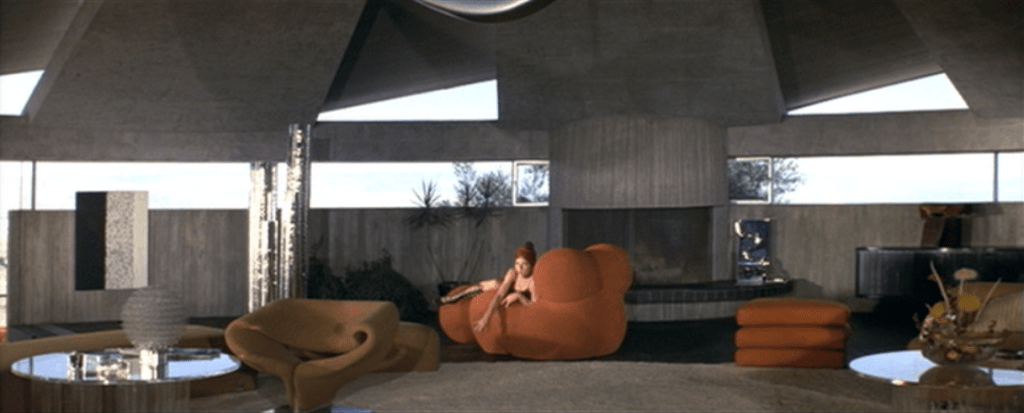
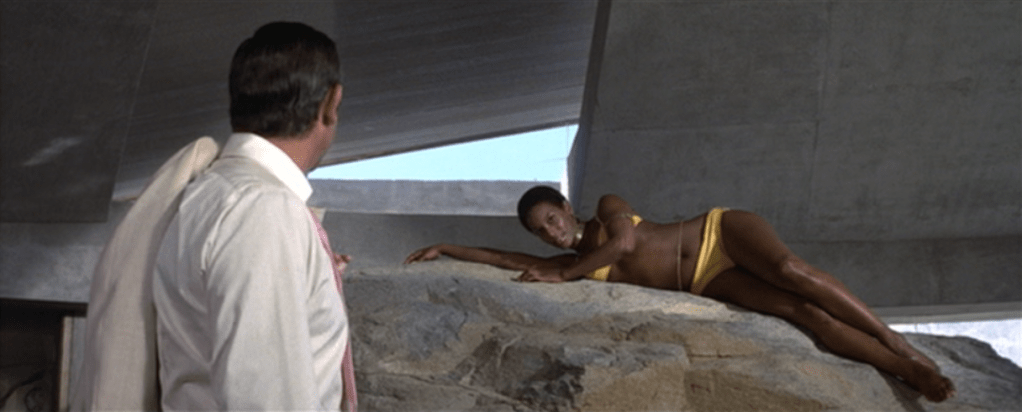
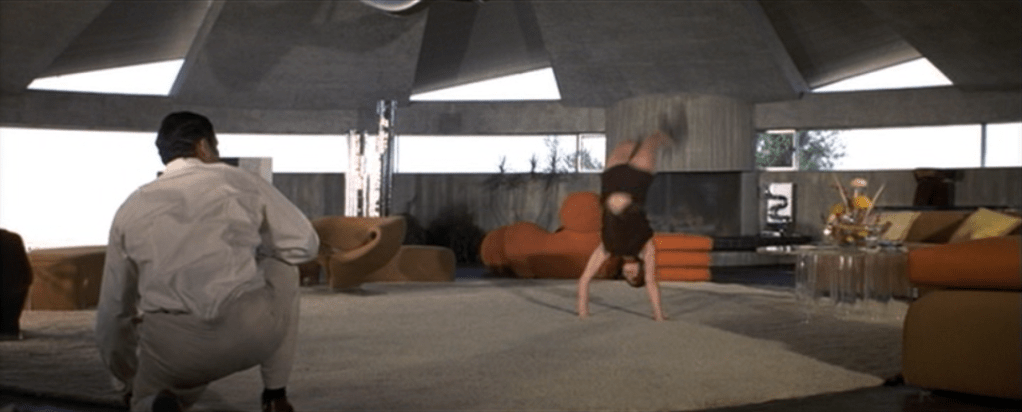
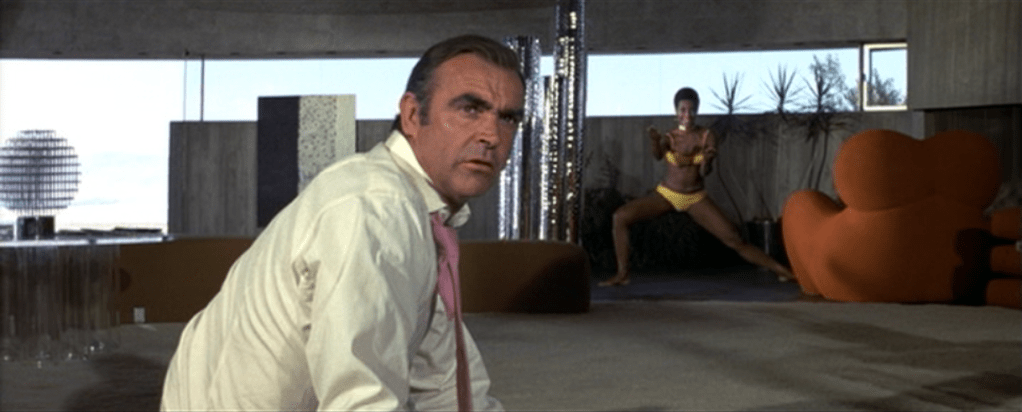
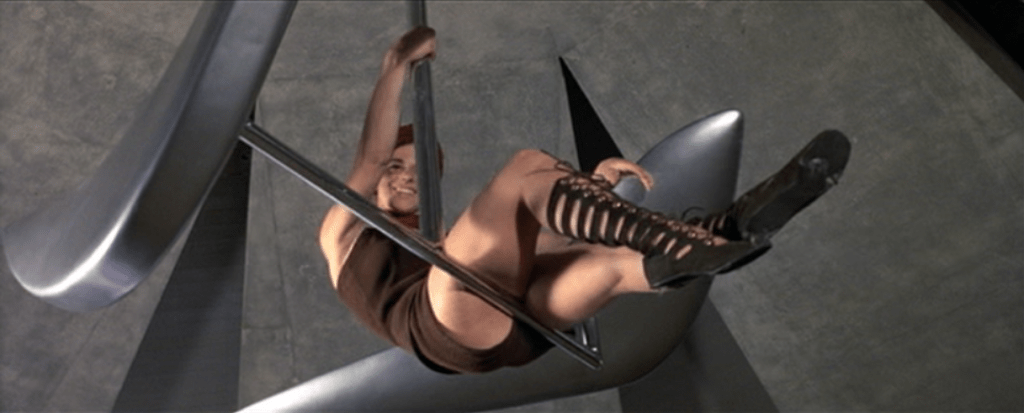
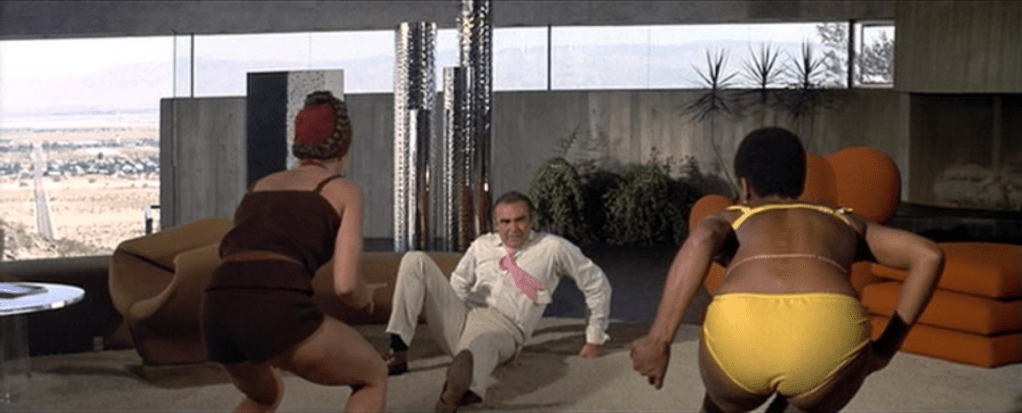
The selected still from Diamonds Are Forever captures Bambi, Thumper, and James Bond during their scuffle at Willard Whyte’s bachelor pad, which in reality is better known as the Elrod House, designed by John Lautner. The wide angle of the camera in this scene exaggerates the flatness and vertically compact living room space that becomes the implied boxing ring of the fight. The choreography of movement and flattening of depth in the still both frame Bambi and Thumper as mid-century modern caryatids, objectified pillars of femininity petrified in space through their homogenizing with the furniture that frames the space around them.
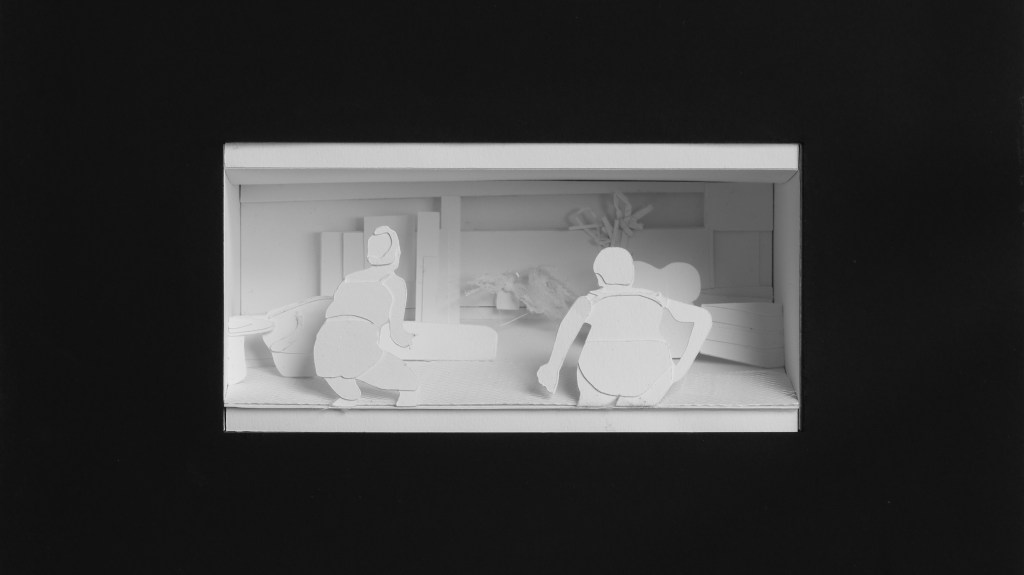
The cylindrical form of the living room harkens back to Jeremy Bentham’s Panopticon, allowing for the constant surveillance of Bambi and Thumper’s bodies by the camera, audience, and Bond. Bond’s occupation of the center of the ring forces Bambi and Thumper into his orbit, defensively revolving around the perimeter of the room with no opportunities for camouflage outside of the furniture scattered throughout the space. The women strategically perch upon the furniture at various instances throughout the scene, taunting Bond to attack with their bedroom eyes, but in their lounging are framed no differently than the objects they are resting upon.
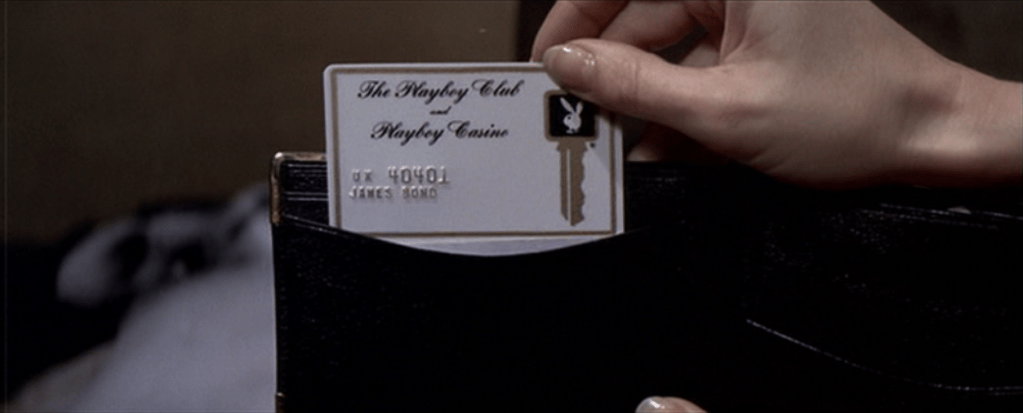
The Elrod House absorbs Bambi and Thumper in its framing of their bodies, objectifying them as another piece of décor for Willard Whyte to display in his home. As women in the 1960s and 70s were advocating for increased autonomy over their bodies, pop culture outputs such as Playboy Magazine exploited the feminine body as an object of sexual desire to men. The framing of Bambi and Thumper’s bodies as architectural elements themselves within this scene reproduces the commodified view of women Playboy was disseminating to its readers. In the mid-20th century, Playboy was able to repackage the ideals of patriarchy into its characterization of the eligible bachelor as a man who was ‘modern,’ successful in his career and able to have sex with any woman he wanted to because of his knowledge and participation in emerging discussions of design and culture. Playboy Magazine even published a story on Lautner’s Elrod House and what inspired its design in 1971, the same year that Diamonds Are Forever was released.[1]
The publication of the Elrod House by Playboy Magazine inherently ties the architectural aesthetics deployed in the design of the home with Playboy’s construction of the bachelor. Bambi and Thumper are depicted as the ideal object of home décor to the Playboy reader in the cinematic flattening of and constructed parallel between their bodies and the other architectural elements occupying the living room. Their violent seduction of Bond results in their figural framing of Bond himself, centered perfectly between two caryatid forms as they attempt to subdue/duce him. They become both lifeless pieces of modern furniture representative of Willard Whyte’s ‘cultured’ world view and sex toys ready to play (or fight) at a moment’s notice. The lifelessness of their bodies is not only spatial, but ideological. Thumper, a black woman, is not only seen as non-human because of the architectural framing and homogenization of her body with the space within the Elrod House, but by the patriarchal, British society that James Bond symbolizes. Historically “…women of color [have been] categorized as genderless and dehumanized by Western society as a result of the imposition of colonization…”[2] and that very same ideology is upheld and reproduced visually in the framing of Bambi and Thumper as non-human statues, standing in direct contrast to the patriarchal, modern, Playboy world they are surrounded by.
In addition to the transformation of Bambi and Thumper’s bodies into a quasi-proscenium, specific elements of their bodies are othered and exploited through their costuming. Both Bambi and Thumper wear revealing garments, but of particular interest here is Thumper’s bikini. Paul Preciado describes the significance of the bikini as a textile architectural framing device:
…the bikini was the representation within the public space of the paradoxical status of female sexuality: a disruptive energy that must be governmentally controlled and kept within the borders of domesticity, but also a seductive energy and the object of heterosexual male desire… a technique for strategically revealing certain parts of the female body while concealing others….[3]
In this particular scene, Thumper’s donning of a bikini makes visual the tension between the domesticated housewife and Playboy Bunny archetype. Bambi and Thumper only exist within the confines of the Elrod House in Diamonds Are Forever, eternally exploited as mid-century caryatid keepers of Willard Whyte’s tranquility at home. Their roles as henchwomen and implied prostitutes are their form of domestic labor, still exploited under a patriarchal master, Whyte, who has restricted their existence to the borders of his home. Bambi and Thumper exist at the intersection of the mid-century tension between housewives and sexually liberated women, tethered to the domestic realm through their labor but also objectified as promiscuous ‘playmates’ ready to please.
[1] J. Yoder, No Title, Journal of the Society of Architectural Historians, 68(2), 2009, pp. 283-288.
[2] Maria Antoinette Norris, “Understanding Colonization’s Role In The Social Construction of Gender & Race.” An Injustice!, August 28 2020.
[3] Paul B. Preciado, Pornotopia: An Essay on Playboy’s Architecture and Biopolitics (Zone Books, 2014), 74.
STILLS